
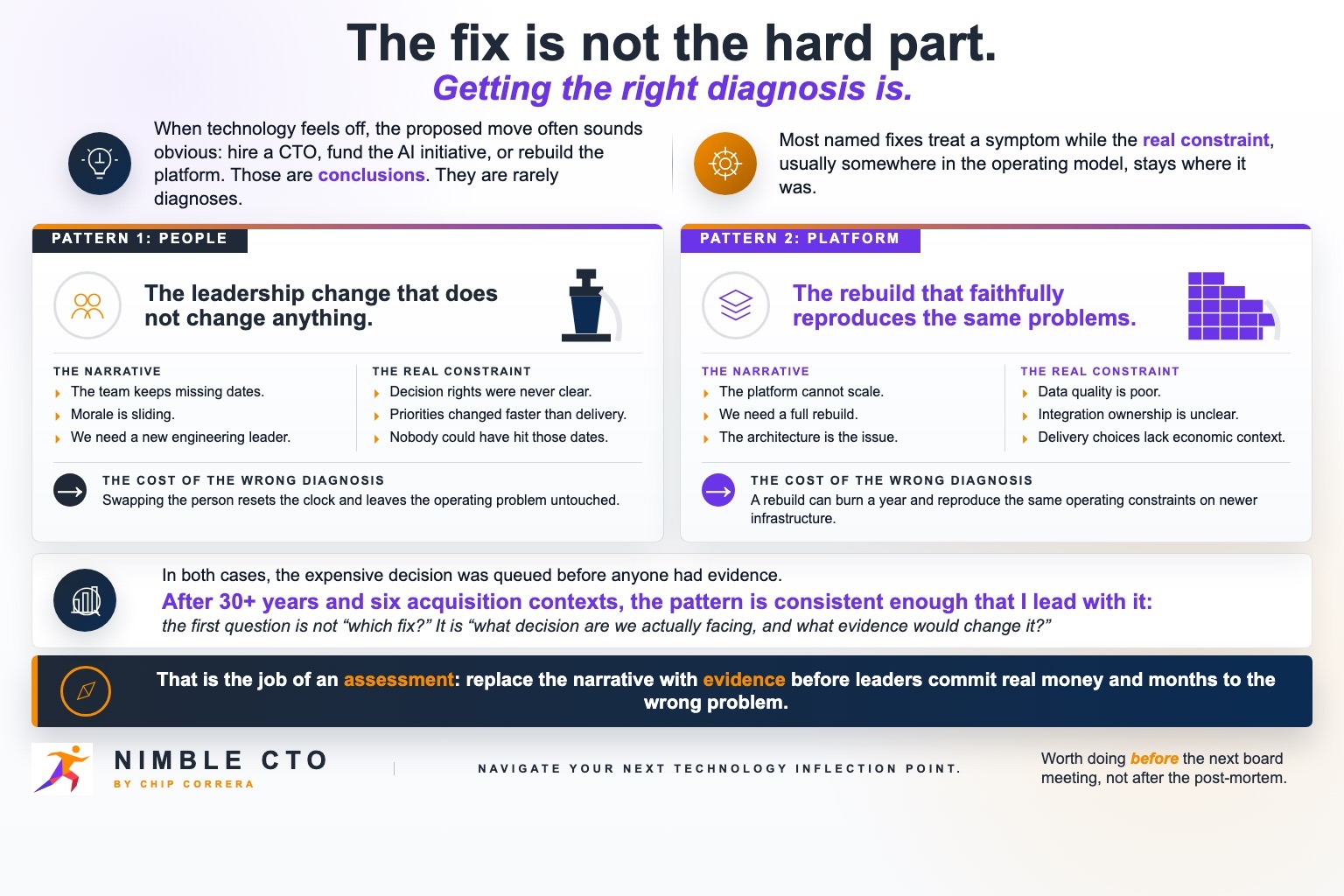
When something feels wrong with technology, the move usually sounds obvious: hire a CTO, fund the AI initiative, replatform. Those are conclusions. They’re rarely diagnoses.
Most of the time the named fix treats a symptom while the real constraint — usually somewhere in the operating model — stays exactly where it was.
Two patterns I see again and again:
A founder is certain they need to replace their engineering leader. The team keeps missing dates and morale is sliding. But look closely, and the leader never had clear decision rights or a way to prioritize — nobody could have hit those dates. Swapping the person resets the clock and changes nothing; a year later, the same conversation comes back with a new name attached.
A board is convinced the platform needs a full rebuild because it “can’t scale.” The real issue turns out to be data quality and two or three integration points nobody owns. A rebuild would burn a year, cost a fortune, and faithfully reproduce the same problems on newer infrastructure.
In both cases, the expensive decision was teed up before anyone had evidence. After 30+ years and six acquisitions, the pattern is consistent enough that I lead with it: the first question is not “which fix.” It’s “what decision are we actually facing, and what evidence would change it?”
That’s the whole job of an assessment — replace the narrative with evidence before you commit real money and months to the wrong problem.
Worth doing before the next board meeting, not in the post-mortem after it.
No responses yet