
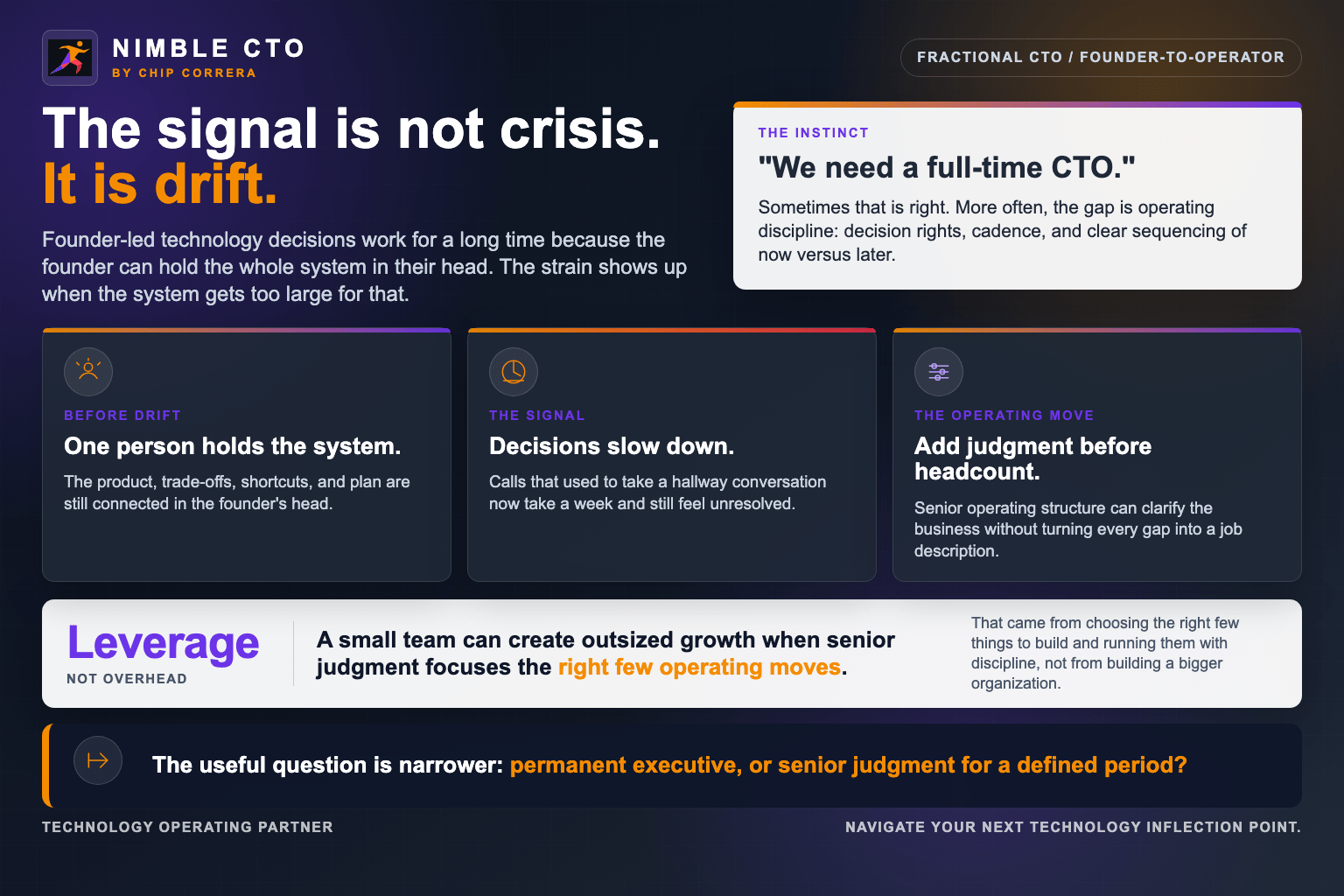
Founder-led technology decisions often work for a long time because the founder can hold the whole system in their head — the product, the trade-offs, the shortcuts, the plan — all in one place.
The signal that something needs to change is rarely a crisis. It’s drift. More people, more customers, more surface area, and decisions start arriving slower and with less conviction. A call that used to take a hallway conversation now takes a week and still feels unresolved. Good people start waiting on each other.
The instinct is to read that as “we need a full-time CTO.” Sometimes that’s right. More often the gap is operating discipline — decision rights, a cadence for the calls that matter, clear sequencing of now versus later — not a new title and not more headcount.
Here’s the part founders underestimate: senior operating judgment is leverage, not overhead. I led a small team to quadruple revenue and profits while adding only four people to a 70-person org. That didn’t come from building a bigger organization. It came from choosing the right few things to build and running them with discipline.
The opposite is just as common: a 40-person team that has doubled its headcount and slowed down because every new hire added coordination costs without anyone changing how decisions are made.
So the useful question is narrower than “do we need a CTO.” It’s: do we need a permanent executive, or do we need senior judgment and operating structure for a defined period, while the business figures out what it’s becoming?
For a lot of founders, that second option is the unlock — and it’s the one they skip straight past on the way to a job description.
No responses yet